Salt is one of the oldest minerals that mankind has used, and it is still an essential mineral. Salt has many applications apart from the kitchen, like industry, healthcare, food preservation, and water treatment. These days, there are many types of salt available, each tailored for specific culinary or industrial purposes. Learning about the various kinds of salt will help consumers and businesses make informed decisions according to the level of quality, purity, and required application.
Among other things, India stands out as a major producer and exporter of salt and is also a leading supplier to both the local and global markets. Companies like Goyal Salt have greatly contributed to the building of this reputation through the production of high-quality edible as well as industrial salts in compliance with strict standards of quality. Regardless of whether it is home-cooking salt or large-volume salt for manufacturers, opting for a reliable producer means always having the same good and stable product quality. We shall, in this all-encompassing article, get the hang of all sorts of salt, their characteristics, uses, and how they support both manufacturing sectors and families.
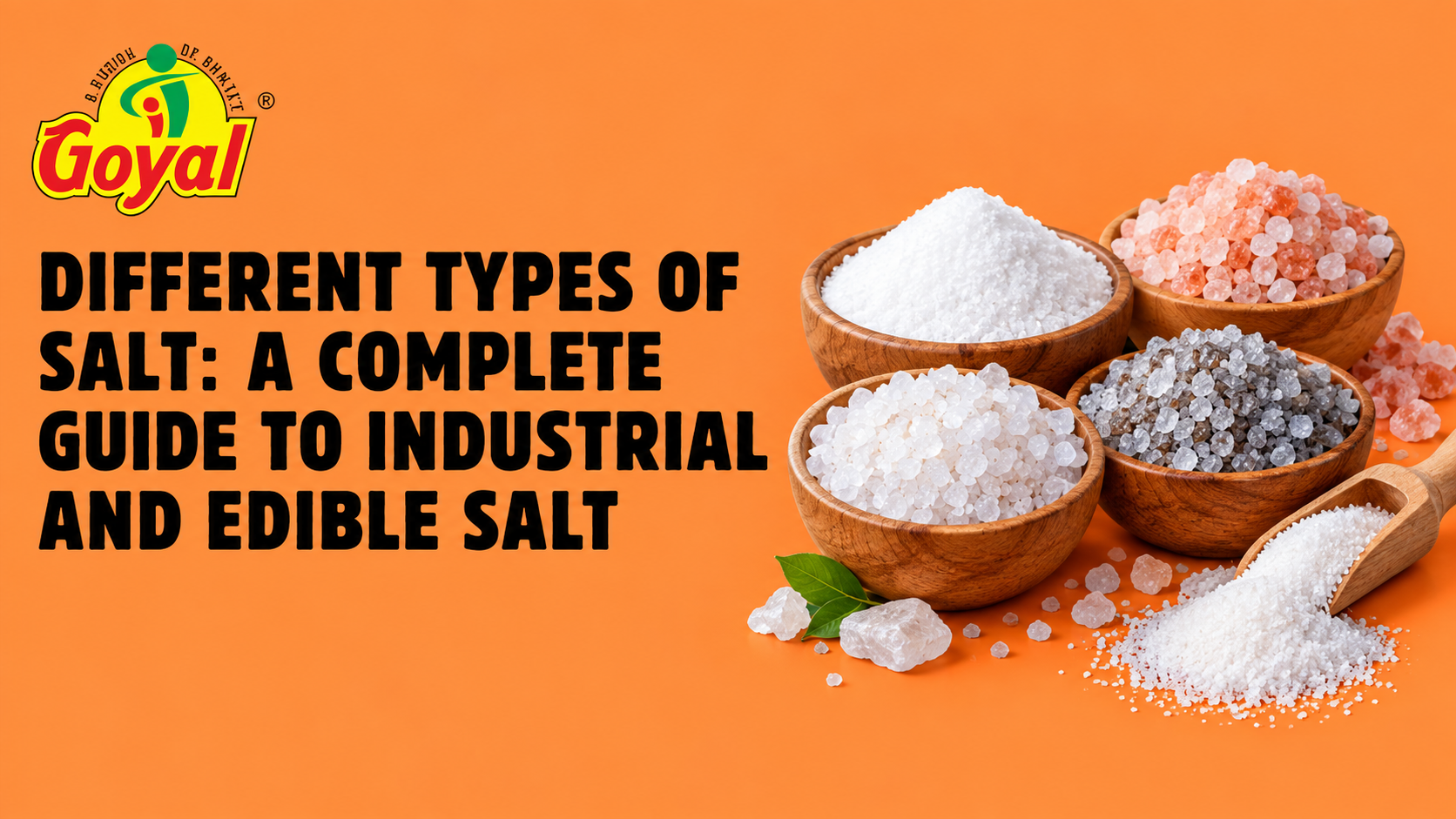
Understanding the Different Types of Salt
Although salt is mainly sodium chloride, its classification depends on the source, processing method, mineral content, and how it is going to be used. We mainly distinguish salt in these two broad types:
Edible salt
Industrial salt
Both types are subject to different production methods and quality controls given the intended use. The production of edible salt is carried out under food safety conditions, whereas industrial salt is manufactured to be used in different industries like production, water treatment, textiles, chemicals, and pharmaceuticals. Goyal Salt, is just one example of the major producers that provide a very diverse product line of salt that is capable of satisfying numerous customer needs simultaneously with high-standard purity and consistency.
What is Edible Salt?
Edible salt is a type of salt that is only edible and has been made to be sold to human consumers. It is mostly a product of household kitchens, restaurants, food processing factories, and commercial kitchens. Given the production method used and the minerals available, many edible salts are produced.
Types of Edible Salt
Iodized Salt
Iodized salt is the most popular table salt worldwide. It was given iodine, a necessary micronutrient that aids thyroid function and also helps prevent disorders caused by iodine deficiency.
Iodine may be lacking in diets, so salt iodization has been a key tool of public health for quite some time now in various countries.
Benefits of Iodized Salt
Supports healthy thyroid function
Helps prevent iodine deficiency
Suitable for daily cooking
Fine texture for easy mixing
Ideal for households and commercial kitchens
Premium manufacturers such as Goyal Salt ensure that iodized salt is processed under hygienic conditions while maintaining optimal iodine levels and consistent quality.
Non-Iodized Salt
Unlike iodized salt, non-iodized salt contains pure sodium chloride without added iodine. It is widely preferred in food industries where iodine may interfere with fermentation, curing, or preservation processes.
Common Uses
Baking
Pickling
Cheese production
Food preservation
Meat curing
Commercial food processing
Its neutral composition and consistent grain size make it suitable for specialized food manufacturing applications.
Sea Salt
Sea salt is harvested by letting seawater evaporate under the influence of the sun. As it is processed very little, it may still contain tiny amounts of minerals such as magnesium, calcium, and potassium, giving it a special taste and feel of the grains.
Chefs and home cooks all over the world love sea salt for its ability to enhance the flavor of food and at the same time add an earthy natural touch to dishes.
Features of Sea Salt
Naturally harvested
Available in fine and coarse crystals
Mild mineral-rich flavor
Suitable for gourmet cooking
Popular finishing salt
Sea salt is commonly used in salads, grilled vegetables, seafood, and premium culinary preparations.
Rock Salt
Rock salt is obtained from the salts under the ground layers that were built up over the years. It is less processed than the regular table salt that we use at home, so we can see some naturally occurring minerals in it. Also, it comes in a larger, chunky crystalline form.
Applications of Rock Salt
Traditional cooking
Salt grinders
Food preservation
Religious and cultural ceremonies
Ayurvedic preparations
Rock salt is valued for its natural origin and versatility across both culinary and cultural uses.
Himalayan Pink Salt
Himalayan pink salt is a type of salt that is mined from ancient salt deposits located in the Himalayas. The pinkish hue of this salt is due to the inclusion of naturally occurring trace minerals. The most significant one of these is iron.
Besides cooking, Himalayan pink salt can also be found in such places as decorative salt blocks, salt lamps, and gourmet presentations for dinner and such.
Benefits of Himalayan Pink Salt
Attractive natural appearance
Unique flavor profile
Used in gourmet recipes
Available in coarse and fine grades
Popular for decorative culinary applications
Although it contains trace minerals, its primary component remains sodium chloride, similar to other edible salts.
Black Salt
Black salt, commonly known as Kala Namak, is a staple ingredient in Indian cuisine. It possesses a unique sulfur-like aroma due to naturally occurring sulfur compounds.
Popular Uses
Chaats
Fruit salads
Chutneys
Raitas
Refreshing beverages
Vegan dishes
Its distinctive flavor makes it an irreplaceable ingredient in many traditional Indian recipes.
Cooking Salt
Cooking salt refers to refined edible salt that is used for everyday food preparation. It is available in multiple grain sizes depending on household or industrial requirements.
Advantages
High purity
Quick dissolving
Uniform grain size
Suitable for domestic cooking
Widely used in food processing industries
Brands like Goyal Salt manufacture premium-quality cooking salt using advanced refining techniques to ensure superior taste, purity, and food safety.
Industrial Salt
Salt that is fit for eating is meant to be consumed by humans, whereas salt for industry is produced mainly for lots of commercial and industrial uses. Industrial salt has been a vital raw material in many industries where the product needs to be consistent and of high purity.
Types of Industrial Salt
Industrial salt is one of the most widely used industrial minerals worldwide. It is available in coarse crystals, powder, and customized grades depending on the application.
Major Industrial Applications
Chemical manufacturing
Textile processing
Leather industries
Pharmaceutical production
Glass manufacturing
Detergent production
Chlor-alkali industry
Industrial salt of high quality is crucial in making the production process not only smooth but also in adhering to the requirements specified by various industries.
Suppliers like Goyal Salt deliver the right quality of industrial salt after subjecting it to a series of rigorous quality checks to assure customers of conformity to different industrial specifications at the same time.
Water Softener Salt
Softener salt is a kind of water filter that is meant to be used in a water softening system. Hard water is usually very high in both calcium and magnesium ions, which are responsible for damaging appliances and also making scale that sticks to them. Softener salt works by taking out these minerals from water using the process of ion exchange.
Benefits of Water Softener Salt
Prevents scale buildup
Extends appliance lifespan
Improves water quality
Protects plumbing systems
Enhances cleaning efficiency
Reduces maintenance costs
It is commonly available in pellet, crystal, and block forms depending on the softening system.
Difference Between Edible Salt and Industrial Salt
Although both edible and industrial salt originate from sodium chloride, they differ significantly in terms of processing, quality standards, and intended applications.
Selecting the appropriate salt ensures both safety and optimal performance for its intended purpose.
How to Choose the Right Type of Salt
With so many options available, selecting the right salt depends entirely on your requirements.
For Daily Household Cooking
Iodized cooking salt remains the preferred choice because it provides essential iodine while delivering consistent flavor.
For Gourmet Cooking
Sea salt, Himalayan pink salt, and black salt add texture, visual appeal, and unique flavors to premium dishes.
For Food Preservation
Non-iodized salt and rock salt are excellent choices for pickling, curing, and fermentation.
For Industrial Manufacturing
Industrial-grade salt should be selected based on purity, particle size, and application-specific requirements.
For Water Treatment
Water softener salt is specifically formulated to improve water quality while protecting household and industrial equipment.
Choosing products from established bulk salt suppliers like Goyal Salt ensures dependable quality, consistent performance, and compliance with industry standards.
Why Quality Matters in Salt Manufacturing
The salt quality, whether in cooking or industrial manufacturing, will determine the outcome. Good quality pure salt can enhance the flavor of the food, make the manufacturer more efficient, and increase equipment reliability.
Reputable manufacturers utilize high-tech refining procedures, conduct thorough quality tests, and use hygienic packaging to meet all national and international standards. Goyal Salt has become a reliable brand in the salt business by providing quality edible and industrial salts. Its continuous efforts in maintaining quality, innovating, and ensuring customer satisfaction are what enable businesses and consumers to confidently use the products in various application areas.
Conclusion
Apart from being a basic necessity in kitchens, salt has a broader significance as well. It is a vital raw material not only sustaining homes but also enabling the operations of food industry manufacturers, hospitals, and water treatment units around the globe. When aware of the different kinds of salt, consumers and businesses can figure out what options would best satisfy their requirements, for example, iodized salt for dietary needs, sea salt that chefs appreciate for their flavor, rock salt for ancient purposes, or industrial salt suitable for commercial use.
An esteemed salt producer in India, Goyal Salt aims to offer top-notch edible and industrial salt products to the market. These products will not only be pure but also consistent and capable. From cooking salt of the highest quality to solutions for large-scale industry operations, Goyal Salt remains committed to catering to the needs of the industry and the home with its products that stand for quality, trustworthiness, and uncompromising standards.
Consumer or business, whichever you are, choosing salt is an important decision and a reliable one. Choosing the right salt manufacturer for your edible or industrial needs will make sure you always have salt at your disposal in a quality that is hard-to-top and every grain of which is pure.
Frequently Asked Questions
1. What are the Main Types of Salt?
The main types of salt include iodised salt, non-iodised salt, sea salt, rock salt, Himalayan pink salt, black salt, cooking salt, industrial salt and water softener salt. Each type is prepared for specific cooking, business or factory uses.
2. What is Edible Salt?
Edible salt is salt that is made and prepared for people to eat. It is used in homes, restaurants, big kitchens and food-making companies. Iodised salt, sea salt, rock salt and black salt are some examples.
3. What is the Difference between Edible Salt and Industrial Salt?
Edible salt is made and handled in a way that is safe for people to eat. Industrial salt is made in a way that meets the needs for things like chemicals, cloth making, water cleaning, and building products.
4. What is Industrial Salt used for?
Industrial salt is used in different industries. It is a raw material in chemical production, textile processing, leather treatment, medicine manufacturing, glass making, detergent production, chlor-alkali processes and water treatment systems.
5. What is Water Softener Salt?
Water softener salt is specially made for water softening systems. It works by removing calcium and magnesium ions from water through a process called ion exchange. This helps prevent scale buildup and protects pipes and household appliances from damage.